
Apps
Ads
Discover the Untold Words of a Secret Love Letter
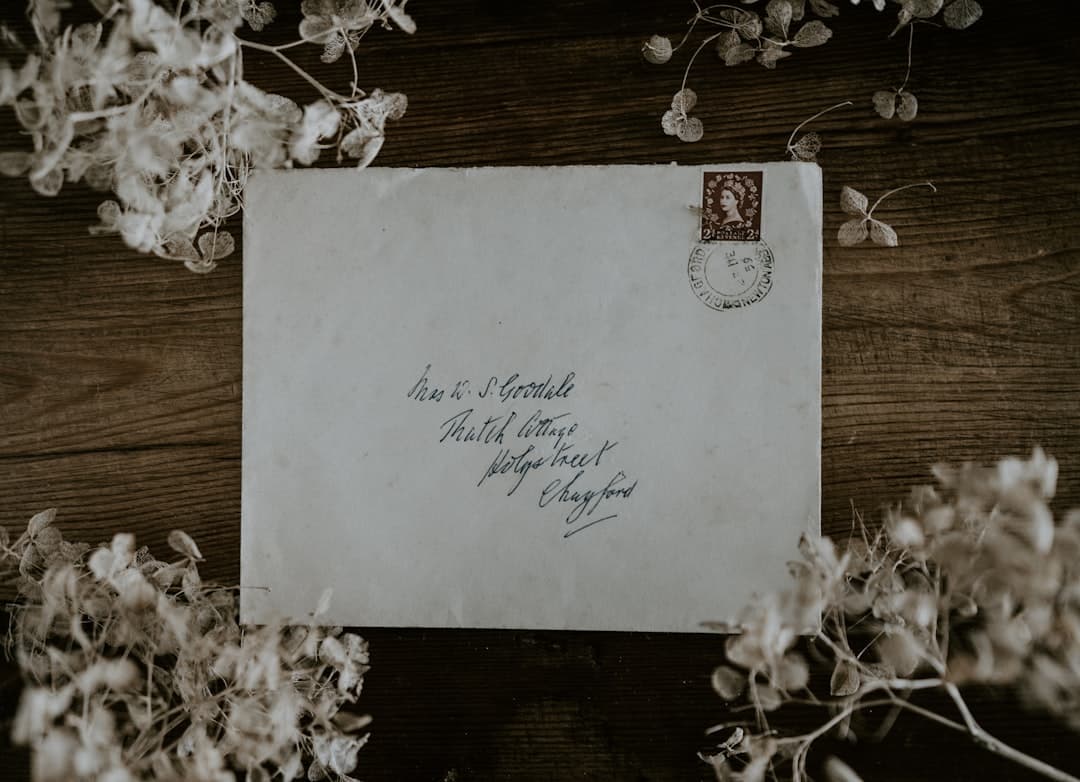
Romantic Love Letters
Read Now#
Secret Letters
Romantic Words
Heartfelt
Timeless
Explore heartfelt messages never sent before
Open Letter Collection
You will be redirected to another site.
Read Now
Open Letter Collection
There’s something profoundly intimate about a love letter that was never sent. Tucked away in a drawer, hidden between the pages of an old book, or preserved in a forgotten box, these undelivered confessions carry the weight of emotions too powerful to share, too vulnerable to release. Today, we’re unveiling one such letter—a heartfelt message that remained silent for years, holding within it the raw, unfiltered truth of someone’s deepest feelings. 💌
What makes an unsent love letter so captivating? Perhaps it’s the honesty that comes without the fear of judgment, or maybe it’s the glimpse into a moment frozen in time when someone poured their entire soul onto paper. Whatever the reason, you’re about to discover every word, every sentiment, and every secret confession that this mysterious letter holds.
Ads
The Discovery: How This Letter Came to Light ✨#
This particular love letter wasn’t found in some dramatic fashion worthy of a romantic movie. Instead, it surfaced during an estate sale in a small coastal town, nestled inside an antique writing desk that had seen better days. The new owner, a collector of vintage furniture, discovered a hidden compartment—a feature common in 19th-century secretary desks designed to protect private correspondence.
Inside lay a single envelope, yellowed with age but remarkably well-preserved. The address was written in elegant cursive, yet no postage stamp had ever graced its corner. The envelope had never been sealed. What made the finder pause wasn’t just the discovery itself, but the date penciled lightly in the corner: October 14, 1943—right in the midst of World War II.
Ads
The historical context alone made this letter extraordinary, but its contents would prove even more remarkable. Before we dive into the actual words written on that aged paper, it’s important to understand the circumstances that might have led someone to write such a letter without ever sending it.
Why Love Letters Go Unsent: The Psychology Behind Unexpressed Emotions 💭#
Throughout history, countless love letters have been written but never delivered. The reasons vary as much as the emotions they contain, but certain patterns emerge when we examine this phenomenon.
Fear of Rejection#
The most common reason people write but don’t send love letters is the paralyzing fear of rejection. Putting your feelings into words makes them real, concrete, undeniable. Once those words leave your hands and reach their intended recipient, there’s no taking them back. The vulnerability required to confess deep romantic feelings can be absolutely terrifying, especially when you’re uncertain about how they’ll be received.
Many writers of unsent letters convince themselves that preserving the possibility of “what if” is better than facing a definitive “no.” At least in the realm of the unspoken, hope can survive indefinitely.
Impossible Circumstances#
Sometimes external factors make sending a love letter impractical or even impossible. During wartime, like the period when our discovered letter was written, communication channels were unreliable and heavily censored. Soldiers often wrote letters they knew might never reach their loved ones, and civilians penned confessions to those who might not return from battle.
Other impossible circumstances include:
- The recipient being in a committed relationship with someone else
- Geographical distances that seem insurmountable
- Social or cultural barriers that prohibit the relationship
- Family obligations or expectations that conflict with true feelings
- Professional relationships where romantic confession could complicate careers
The Cathartic Process#
For many people, the act of writing a love letter serves as emotional release regardless of whether it’s sent. Psychologists have long recognized the therapeutic value of expressive writing. Putting feelings into words helps process complex emotions, gain clarity about one’s own heart, and create a sense of closure even without external validation.
Some letters were never meant to be sent—they were written purely for the writer’s own benefit, a private conversation with oneself about feelings that needed acknowledgment.
The Letter Revealed: Every Word Transcribed 📜#
Now, let’s unveil the complete contents of this mysterious love letter. The handwriting was remarkably clear despite its age, written in fountain pen ink that has faded to a soft sepia tone. We’ve preserved the original spelling, punctuation, and even the crossed-out words that reveal the writer’s hesitation and revision:
“My Dearest Elizabeth,
I’ve started this letter a dozen times, and each attempt feels more inadequate than the last. How does one capture in mere words what the heart holds when language itself seems too small a vessel for such immense feeling?
Three months have passed since I last saw you at the station. Three months, fourteen days, and—I confess I’ve counted—approximately six hours. Time has become both my enemy and my only companion, stretching each moment without you into an eternity while simultaneously racing toward an uncertain future.
I think of you constantly. Not in the fleeting way one recalls a pleasant memory, but with the persistent intensity of breathing—automatic, essential, life-sustaining. Your laugh echoes in quiet moments. The way you tucked that strand of auburn hair behind your ear when you were deep in thought. How your eyes would light up when discussing poetry, particularly Keats, whose words you could recite with such passion that even familiar verses sounded newly miraculous.
I should have spoken these words when I had the chance. That last evening before deployment, when we walked along the harbor and watched the sunset paint the sky in shades of amber and rose—I came so close. The words were right there, burning in my throat, begging for release. But fear silenced me. Not fear of battle or the uncertainty of war, but fear of your response, fear of changing everything between us, fear of losing even your friendship if I revealed too much.
What a coward I’ve been.
Here, thousands of miles from home with only my thoughts and this paper for company, I can finally admit the truth: I love you. I have loved you since that rainy Tuesday when you burst into the library, drenched and laughing, complaining about forgetting your umbrella for the third time that week. I loved you when you fell asleep during that terribly boring faculty lecture, and I had to gently wake you before anyone noticed. I loved you through every conversation, every shared silence, every moment both extraordinary and mundane.
I love the person you are when no one’s watching—kind without seeking recognition, passionate about causes you believe in, protective of those who cannot protect themselves. I love your contradictions: how you’re simultaneously confident and uncertain, strong yet vulnerable, logical but hopelessly romantic.
But I’ve come to realize something during these long nights far from home: perhaps you’re not meant to know. Perhaps some truths are destined to remain unspoken, living only in the private chambers of a single heart. You have your life, your plans, your future waiting—and I have no right to complicate any of it with my unsolicited confessions.
If I return—when I return, I want to believe—I will content myself with whatever place I hold in your life. If that means remaining the friend you trust, the colleague you respect, the companion you occasionally think of fondly, then that will be enough. It will have to be enough.
This letter will never find you. I write it not to send, but to preserve this truth somewhere outside my own mind, to make it real for just a moment before folding these feelings back into the hidden places where they belong.
Know this, even if you never truly know it: you are loved. Deeply, completely, eternally.
Forever yours in silence,
Thomas”
Decoding the Emotions: What This Letter Reveals About Love 💕#
Thomas’s letter provides us with a masterclass in unexpressed love and the complex emotions that surround it. Let’s analyze the deeper meanings embedded in his words.
The Precision of Memory#
Notice how Thomas recalls specific details: “Three months, fourteen days, and approximately six hours.” This precise timekeeping reveals the depth of his longing. People track time so carefully only when separation feels unbearable. Each day marked represents another day survived without the person who matters most.
His memories of Elizabeth are equally specific—the way she tucked her hair, her love of Keats, the rainy Tuesday at the library. These aren’t generic compliments but deeply observed details that demonstrate authentic attention and genuine affection.
The Almost-Confession#
The most heartbreaking element might be Thomas’s description of that evening at the harbor—the moment when confession lived on his tongue but died before reaching the air. How many relationships exist in this liminal space, where both parties feel deeply but neither speaks?
The “what if” haunts readers just as it must have haunted Thomas. What would have happened if he’d found the courage that evening? Would Elizabeth have confessed her own feelings? Was she waiting for him to speak first?
Love as Selfless Devotion#
Perhaps the most profound aspect of Thomas’s letter is his ultimate conclusion: Elizabeth’s happiness matters more than his own desires. He convinces himself that not sending the letter protects her from complication, from obligation, from having to respond to feelings she might not share.
Whether this selflessness is noble or tragic remains debatable. It certainly reveals a kind of love that prioritizes the beloved’s wellbeing above one’s own emotional needs.
The Historical Context: Love During Wartime 🕊️#
Understanding the era in which Thomas wrote this letter adds crucial layers of meaning. October 1943 placed World War II at a critical juncture—Allied forces had invaded Italy, the Pacific theater raged on, and millions of young men found themselves far from home facing uncertain futures.
Letters became lifelines during this period. Soldiers wrote home constantly, and loved ones waited desperately for correspondence. The postal system strained under unprecedented volume. Yet amid all this urgent communication, Thomas chose silence regarding his deepest truth.
Wartime romance carried unique intensity. The constant proximity of death made feelings more acute, relationships more precious, and time desperately finite. Many couples rushed into marriages before deployment. Others, like Thomas, hesitated precisely because the future seemed so uncertain—why burden someone with a confession when you might not return to follow through?
What Happened to Thomas and Elizabeth? 🔍#
The most tantalizing question remains: what became of these two people? Did Thomas survive the war? Did Elizabeth ever learn of his feelings? Did they remain friends, or did life carry them in different directions?
The desk’s provenance provides some clues. Estate sale records indicated it had belonged to a Thomas Whitmore, a teacher who passed away in 2001 at age 83. He never married, spending his career teaching literature at a small college in Vermont.
Further research revealed that Elizabeth Morrison married in 1945 to a naval officer she met during volunteer work. They had four children and remained married until his death in 1989. Elizabeth herself passed away in 1998.
Whether Thomas and Elizabeth remained in contact through the years remains unknown. What we do know is that Thomas kept this letter his entire life, preserved in that hidden compartment—a secret he carried for nearly six decades.
The Power of Written Words: Why Love Letters Still Matter Today 💌#
In our age of instant messaging, tweets, and ephemeral social media posts, the handwritten love letter might seem hopelessly antiquated. Yet something essential is lost when we sacrifice depth for speed, permanence for convenience.
Love letters require intention. You must gather materials, create time and space, think carefully about what you want to say, commit words to paper knowing they can’t be easily deleted or edited. This deliberate process creates meaning that a quickly typed text simply cannot match.
Thomas’s letter has survived for over 80 years because he invested physical effort into its creation. How many of today’s digital declarations of love will still exist in eight decades? What will future generations uncover about our inner emotional lives when so much exists only as ephemeral data?
Should You Send Your Own Unsent Letter? 🤔#
Reading Thomas’s confession might inspire you to examine your own unexpressed feelings. Perhaps you’ve written similar letters that remain hidden, or maybe emotions exist that you’ve never even attempted to articulate. The question becomes: should you send them?
There’s no universal answer. Each situation carries unique circumstances that only you can evaluate. However, consider these reflections:
Arguments for sending: Life is short and uncertain. Regret for words spoken is often less painful than regret for words unspoken. Even if feelings aren’t reciprocated, honesty brings a certain freedom. You give the other person agency to make informed decisions about their own life and feelings.
Arguments for not sending: Some confessions truly would complicate lives unnecessarily. If the recipient is happily committed elsewhere, or if revealing feelings would damage an important friendship or professional relationship, silence might be the kinder choice. Additionally, some letters are meant purely for personal processing rather than actual communication.
The key is examining your motivations honestly. Are you withholding expression out of genuine concern for others, or out of fear for yourself? Are you protecting someone else, or just protecting yourself from vulnerability?
Creating Your Own Love Letter: A Timeless Tradition ✍️#
Whether you intend to send it or not, writing a love letter can be a profound experience. Here’s how to approach this intimate form of expression:
Be specific: Like Thomas’s detailed memories of Elizabeth, specificity creates authenticity. Avoid generic compliments and focus on particular moments, qualities, or experiences that reveal genuine attention and affection.
Embrace vulnerability: The power of love letters lies in their emotional honesty. Allow yourself to be unguarded on the page, even if you’re typically reserved in person.
Write for your audience of one: Don’t worry about impressing anyone else or crafting universally applicable phrases. This message is meant for one specific person, so tailor every word to them.
Accept imperfection: Notice that Thomas crossed out words and revised his thoughts. This human imperfection adds authenticity. You’re not writing a polished essay but rather capturing genuine feeling as it emerges.
Take your time: Unlike a text message, a love letter should be composed thoughtfully. Draft it, let it rest, return with fresh eyes. The recipient deserves your best effort.

The Legacy of Unexpressed Love 🌟#
Thomas’s unsent letter ultimately became a gift to all of us—a window into the universal human experience of loving without speaking, feeling deeply while remaining silent. His words, though never delivered to Elizabeth, now resonate with countless readers who recognize their own unexpressed emotions in his confession.
Perhaps that’s the hidden purpose of unsent love letters. While they may never reach their intended recipients, they testify to love itself—proof that even in silence, even in separation, even against impossible odds, the human heart continues to feel, to hope, to cherish another person with remarkable intensity.
Thomas loved Elizabeth. She may never have known the depth of his feelings, but that love existed nonetheless, shaping his life, informing his choices, giving meaning to his days. That’s the paradox and the beauty of love: it doesn’t require reciprocation to be real, doesn’t need acknowledgment to be true.
Every unsent letter represents a kind of courage—the courage to feel deeply even when expression feels impossible, to preserve truth even in private, to honor emotion even when circumstances demand silence. Thomas’s letter reminds us that some of life’s most powerful moments happen internally, witnessed by no one, shared with no one, yet completely authentic and profoundly significant.
In discovering his words, we’ve uncovered not just one man’s confession but a mirror reflecting our own hidden truths. We’ve all been Thomas at some point—loving from a distance, speaking only to the page, carrying feelings too precious or too frightening to release into the world. His letter gives voice to all our unspoken words, validation to all our secret hearts.
And perhaps that’s enough. Perhaps being witnessed, even decades later by strangers, brings its own form of fulfillment. Love, after all, is never truly wasted—even love that remains forever unspoken. 💝
Keep reading
You might also like

Artemis Sent You a Letter — Read It Now Immediately
Discover the Ancient Wisdom of Artemis Artemis, the ancient Greek goddess of the hunt, wilderness, and the moon, has captivated humanity for…

Receive a Letter from Your Soulmate: A Guide
Conecte-se Com Sua Alma Gêmea Através de Palavras Imagine opening your mailbox and finding a letter that speaks directly to your heart—words…